
Reliable Detection Distance for Trusted Perimeter Design
Published thermal camera detection range only matters if it reflects how intrusions actually happen.
For outdoor perimeter security, the question is not how far a sensor can theoretically see a target. The question is how far the system can generate a trusted alert under the conditions your site actually presents.
Many range claims are based on easier detection scenarios. SightLogix specifies our SightSensor smart thermal camera detection range against the hardest case: a person approaching directly toward the camera, with margin built in. That gives security teams, consultants, A&E firms, and integrators a range they can trust across real perimeter designs.
Why Detection Range Is Often Misunderstood
Detection distance is not always measured the same way.
 A person moving across a camera’s field of view is easier to detect because the target creates more visible motion from frame to frame. A person walking directly toward the camera is harder. The target changes more slowly, creates less lateral movement, and presents a smaller changing profile as distance increases.
Both scenarios involve a person at the perimeter. But they are not the same detection problem. A range claim based on the easier scenario can look stronger on a spec sheet while overstating what designers should expect in the field.
For perimeter security, the most useful number is the distance at which the system can generate an actionable alert, not simply the distance at which a target may be visible or create measurable motion.
The Hardest Case Is the One That Matters
Real intruders do not approach in the way that makes the camera look best.
At substations, mission-critical data center campuses, airports, logistics sites, and other high-security outdoor perimeters, the critical event is often a person approaching the protected area. That may mean walking toward the fence, crossing open ground, or moving through a buffer zone before reaching critical infrastructure.
That is why SightLogix specifies detection distance against the inbound approach: the hardest geometry for video-based detection. We design our products with detection margin built in, so the system is not being stretched beyond its real performance limits to create a more attractive layout.
If the system is designed to perform in that harder scenario, security teams can have greater confidence across easier approach angles as well. A trusted range number is more useful than a flattering one when the goal is a perimeter design that works in the field.
Reliable Range Dramatically Reduces Project Cost
Reliable range is not just a performance claim. It affects the cost and layout of the entire perimeter system.
When a system can detect reliably at longer distance, a site may need fewer camera positions to protect the same fence line, buffer zone, or outdoor asset area. Fewer camera positions can mean fewer poles, shorter trenching runs, less power and fiber, fewer network drops, fewer infrastructure touchpoints, and fewer long-term maintenance points.
That is why unit price is not the best way to evaluate perimeter detection. The more useful measure is cost per protected meter — or cost per reliable detection area — based on the actual site design.
For large sites and multi-site programs, the difference between theoretical range and reliable detection range can change the design, the infrastructure plan, and the budget.
How SightLogix Builds Range You Can Design Around
SightLogix publishes detection distances based on the range at which the system generates a dependable alert for a person approaching directly toward the camera — not the farthest distance a target might be visible under easier conditions.
That distinction appears directly on our datasheets because it matters to real deployments.
SightLogix detection range is built on several engineering foundations:
- Purpose-built thermal imaging for outdoor perimeter detection
- On-device analysis of raw thermal data before video conversion
- Purpose-trained thermal AI for people, vehicles, animals, and background activity
- Image stabilization before analytics are applied
- Geospatial intelligence that understands target size, distance, speed, and direction
What to Ask When Evaluating Detection Range
When comparing perimeter detection systems, ask:
- At what distance will the system generate a reliable alert for a person approaching directly?
- Was the published range based on the easiest case, the hardest case, or something in between?
- Does the published range reflect a real alarm or only a theoretical sensor limit?
- Can the range number be trusted to place cameras, estimate coverage, and model total project cost?
If a range number cannot be used for design, it is not the number that matters.
The Bottom Line
Thermal camera detection range is only valuable when it translates into reliable alerts in real outdoor conditions.
SightLogix specifies range around the hardest case because we want our customers protected for all cases. If the design works, security teams can have greater confidence that the site is fully protected.
Additional Resources & Information
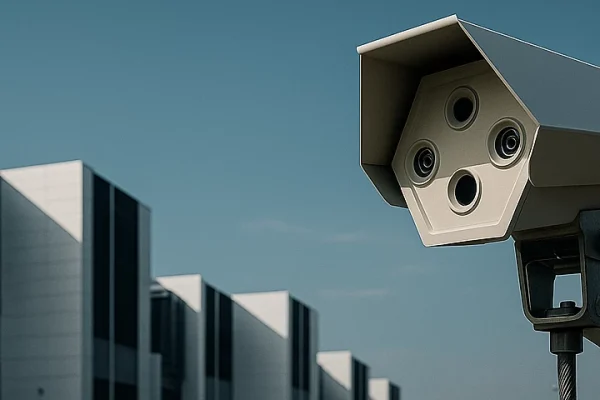
Our Products
Our Smart Thermal Cameras
Safeguard high-value perimeters with edge-based thermal detection, dual-sensor thermal-visible systems, and PTZ tracking—detecting intruders day or night, in any weather.

Our Solutions
Industry-Proven Thermal Protection
Dual sensor analytics secures critical infrastructure and commercial facilities across vast perimeters, reduce false alarms by ninety-five percent.

Get Support
Mission-Critical Support
Reach certified engineers by phone or portal for design reviews, firmware updates, rapid troubleshooting, and proactive fleet health checks worldwide.
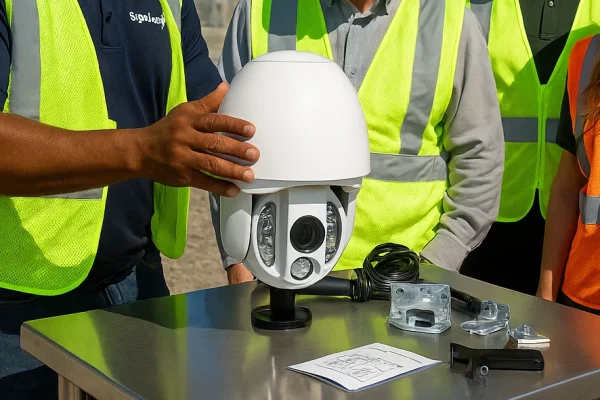
Product Demo
See SightLogix In Action
Watch live or recorded demonstrations where smart thermal cameras detect, classify, and auto-track threats across challenging weather, distances, and layouts.